
GSA Keyword Research: Bulk Keyword Scraper & On-Page SEO Tool
This is a powerful desktop application designed to automate market analysis and competitor intelligence. Easily scrape thousands of profitable long-tail search terms, evaluate traffic metrics, and score difficulty ratings using advanced on-page data points. By reverse-engineering top-ranking websites, our software uncovers hidden opportunities to scale your content strategy effortlessly.

Discover High-Value Traffic Opportunities with Ease
Finding the right search terms to rank a website can be complex and time-consuming. The software streamlines this workflow, saving you hours of manual research.
- Topical Clustering: Automatically organize thousands of ideas into neat thematic groups.
- Intent Filtering: Sort results based on user mindset, separating informational queries from transactional buyers.
- Difficulty Evaluation: Pinpoint low-competition phrases that offer rapid ranking potential.
- Live Metrics: Pull monthly volume data and CPC metrics seamlessly via internal methods or external APIs.
- SERP Deep-Dives: Analyze search engine results pages to uncover the structural choices driving top-ranking sites.
- Side-by-Side Comparison: Audit competing web properties directly against your own domains.
Automated Market Research & Scoring Metrics
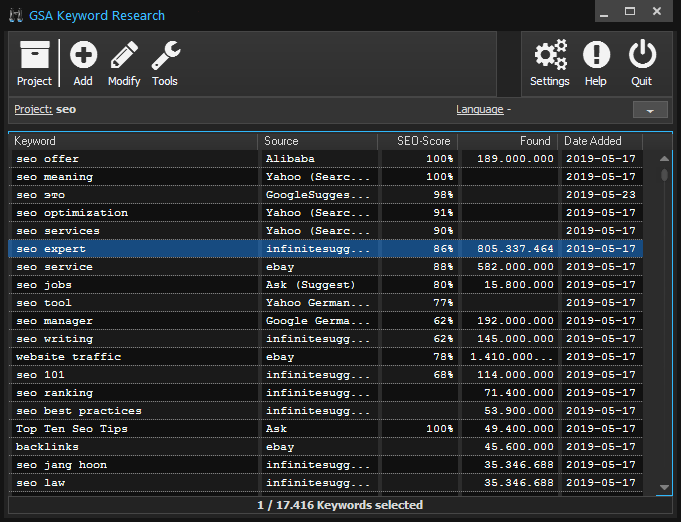
Easily sort through major lists by ranking difficulty or search volume once you have collected raw data for your niche. Instantly know which terms are worth your team's time.
Dynamic Project Management
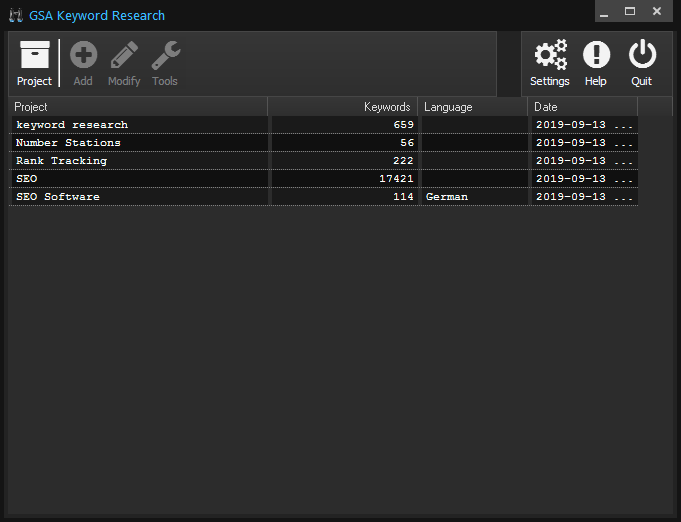
Managing multiple niche portfolios? Keep everything structured across dedicated project spaces, complete with distinct filtering rules for language and country variants.
Deep Competitor Scraping & Extracting
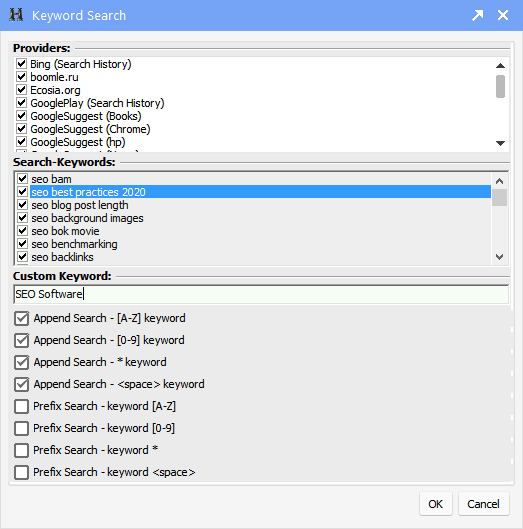
Uncover fresh content ideas effortlessly using built-in crawlers that harvest data from search engine results and live competitor domains.
Reverse-Engineer Top Ranking Sites
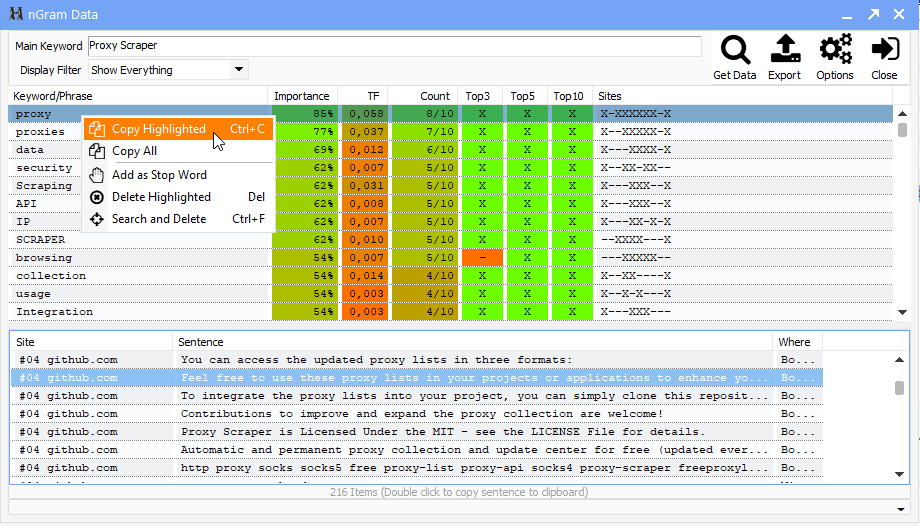
The highest-ranking websites for a specific phrase usually hold secondary search terms that fit your exact market. Use our built-in nGram tool to parse out these hidden gems with just a few clicks.
Keyword Competition
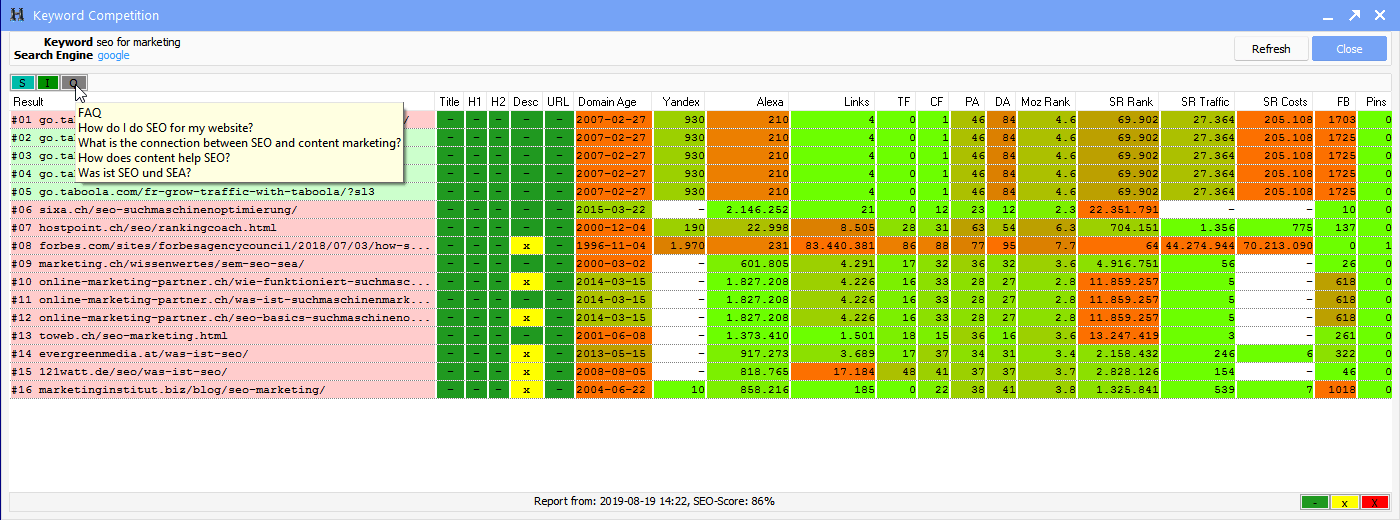
Check how difficult it might be to rank this keyword on page one by analyzing different aspects of the competitors' websites for this keyword. You can use various external APIs to get important metric data like TrustFlow, DomainAuthority, SemRush Rank or MozRank as seen in the screenshot.
On-Page Audits & Competitive Evaluation
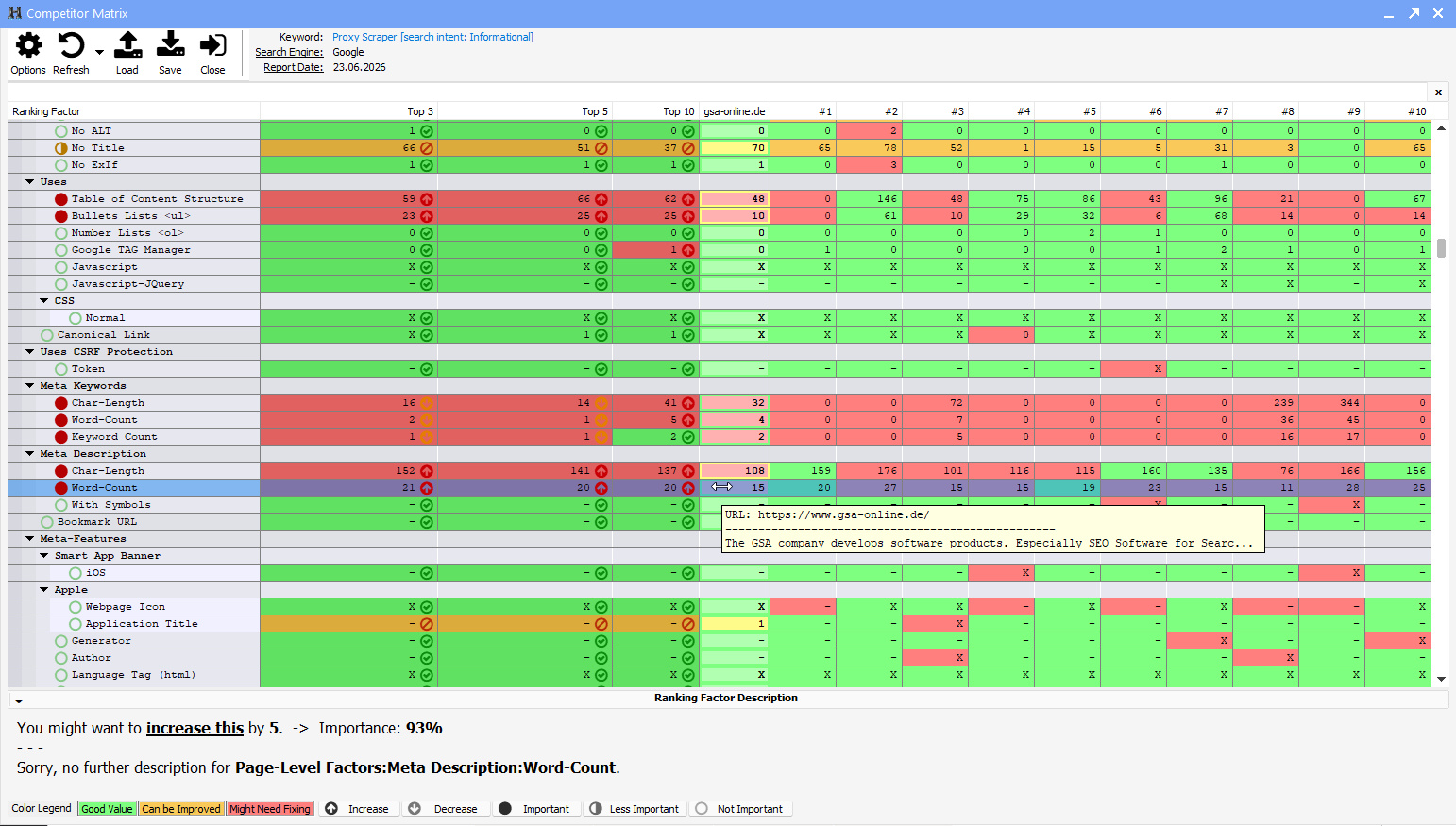
Determine exactly why a target domain is lagging behind the market leaders. Review foundational factors, audit broken links, and analyze page loading speed to eliminate technical bottlenecks.
Automated Technical Reporting
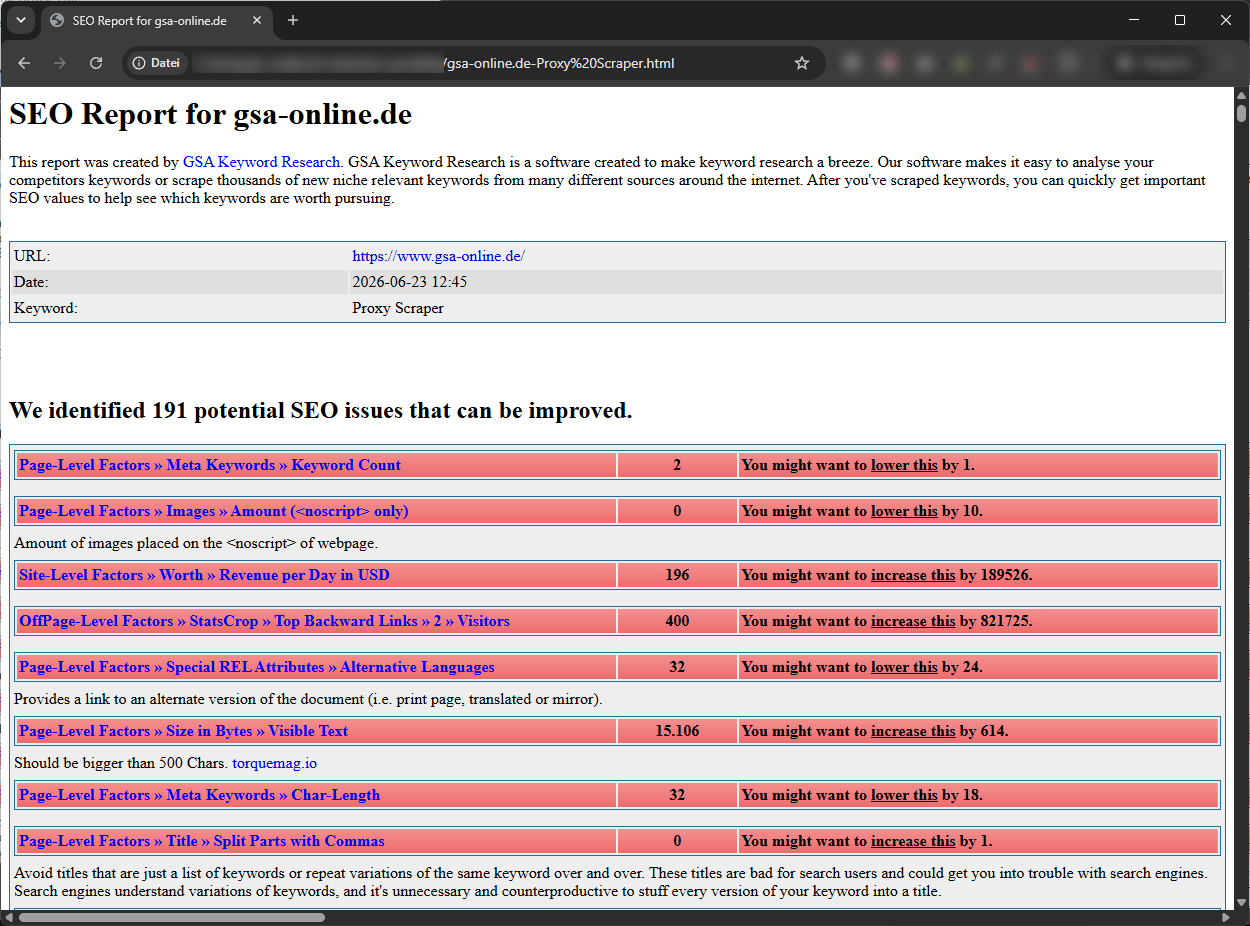
Whether you manage a digital consulting firm or need to track internal performance, our customizable layouts deliver clear, professional PDF/CSV readouts for clients or internal review.
Find the perfect domain for your new website
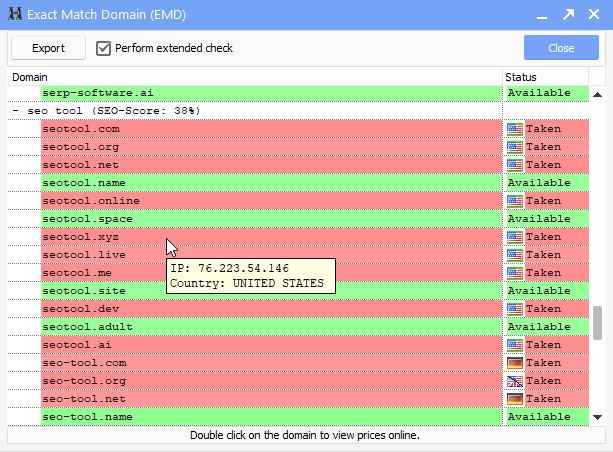
It's nothing new that a webpage ranks best if the ranking keyword is part of the domain name. Now you can quickly see what domains are free for a given keyword.
Content is KEY
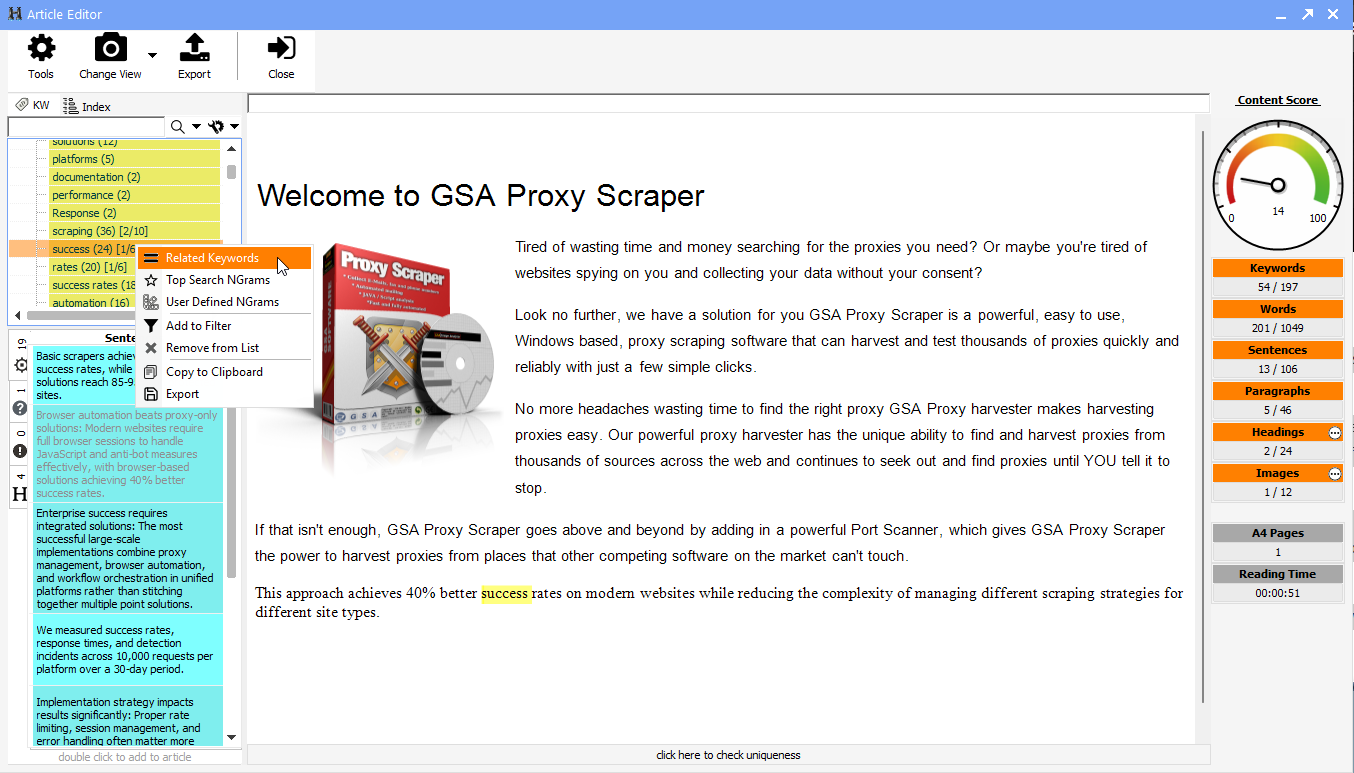
The content of your website is more important than ever. However, writing articles yourself is time consuming. Even relying on AI is not always a good approach if you want to rank well. Our Article Creator helps you to find the correct phrases, shows what needs to be improved to rank for a given keyword. Also note that we have a full product for content & article generation.
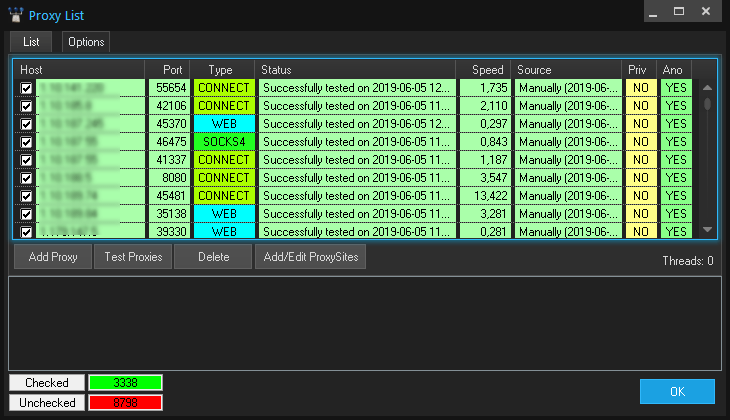
Built-In Proxy Scraper
Having fresh proxies is sometimes important, especially when parsing search engines. Luckily, you don't have to worry about that because the software comes with a built-in proxy scraper capable of finding thousands of fresh proxies.
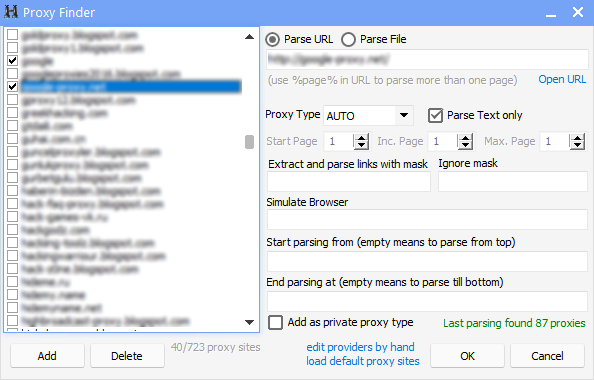
Endless Proxy Sources
Even though using private proxies is always recommended, you can choose to scrape thousands of different sites to get free proxies from.
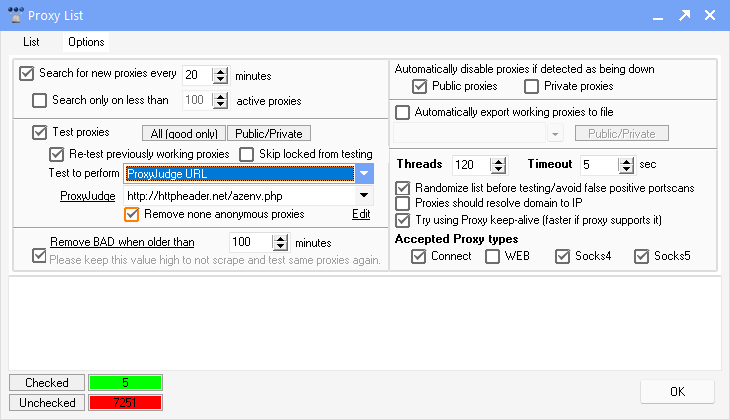
Proxy Scraping Options
You can define everything from how to find new proxies and how to test them. You can even export them to be used by other programs.
Why it Beats Expensive Cloud Subscriptions
See how a professional desktop SEO tool saves you thousands of dollars every year while giving you full data freedom.
| Feature / Metric | GSA Keyword Research | Standard Cloud SEO Tools |
|---|---|---|
| Pricing Model | One-Time Payment (Lifetime License) | Monthly Subscription (Never-ending costs) |
| Average Yearly Cost | $0 After Purchase | $1,200 - $3,600+ (Every single year) |
| Scraping & Research Limits | 100% Unlimited (No credit systems) |
Strict Account Limits (Daily limits / pay per query) |
| Software & Data Privacy | 100% Local & Secure (Runs on your PC or VPS) |
Cloud-Based Only (Your research data is on third-party servers) |
| Proxy Infrastructure | Built-in Proxy Scraper (Thousands of free proxies automatically) |
Locked Systems (No proxy control or automation allowed) |
| Software Updates | Free Updates Forever (Multiple feature upgrades every month) |
Paid Tiers (New features locked behind higher monthly plans) |
| Competitor Spying | Deep nGram & SERP Extraction (Reverse-engineer any URL instantly) |
Aggregated Database Only (Often misses local long-tail keyword gaps) |
Frequently Asked Questions (FAQs)
► How does this help improve my website ranking?
Finding the right search terms is the foundation of any successful SEO strategy. It helps you uncover high-volume, low-competition long-tail keywords that your target audience is actively searching for. By optimizing your content for these specific terms, you can rank higher on Google faster and attract highly targeted organic traffic.
► Can I use this tool to spy on my competitors' keywords?
Absolutely. The software features an advanced reverse-engineering tool. You can input any top-ranking competitor URL to extract the exact keywords they are ranking for. By using the built-in nGram tool, you can analyze their content structure, identify their keyword gaps and implement those proven search phrases into your own content marketing strategy.
► Do I need to purchase external API keys to see search volume or SEO difficulty?
No, external APIs are completely optional. The software can monitor, scrape and calculate keyword difficulty scores and search data using its internal scraping algorithms. However, if you prefer to sync data from specific third-party SEO tools, the software seamlessly integrates with major APIs like Moz. An import/export is also possible and will work with every other tool.
► How does the automated Keyword Clustering feature work?
Manually sorting thousands of scraped keywords into content ideas takes hours. The program automatically organizes your keyword lists into topical clusters based on semantic relevance and user intent (e.g., separating informational queries from transactional buyers). This allows you to plan entire blog categories or silo structures with just a few clicks.
► Does the software include a proxy scraper or do I need to buy proxies?
The software comes with a powerful, built-in proxy scraper that automatically harvests thousands of free public proxies from endless online sources. This ensures you can scrape search engines safely and anonymously without facing IP blocks. For heavy-duty industrial scraping, you can also easily import your private paid proxies.
► Can I find transactional and buyer-intent keywords for e-commerce?
Yes. The software includes advanced filters that allow you to isolate keywords containing high-buying intent modifiers (such as "buy", "best price" or "review"). You can also extract trending search terms directly from major e-commerce platforms like Amazon and eBay to optimize your product descriptions and outrank competitors in retail search.
► Does the software support keyword research for non-English languages?
Absolutely. GSA Keyword Research is built for global SEO. You can configure the scraper to target localized versions of Google, Bing and Yahoo across different countries and regions. The software automatically handles international character sets, allowing you to uncover high-converting multilingual and local SEO keywords.
► What are the system requirements and can I run it on a VPS?
The software is highly optimized, lightweight and runs smoothly on any standard Windows PC (Windows XP up to Windows 11+ and Windows Server editions). Because it requires zero bloated databases, it uses very little RAM. It is 100% compatible with Virtual Private Servers (VPS), allowing you to run heavy, automated keyword-scraping tasks 24/7 in the background.
► Can I export the keyword data to other SEO tools or Excel?
Yes. Managing your data is seamless. You can export your organized keyword clusters, search volumes and competition metrics into standard formats like CSV or TXT files. This allows you to easily import your new keyword lists into spreadsheet software like Microsoft Excel or Google Sheets or directly plug them into content generation and backlink tools like GSA Search Engine Ranker.
► Is this software a subscription-based fee product?
It is a one-time purchase. Like all GSA products, your license is a lifetime license with zero recurring monthly fees or hidden costs. Furthermore, all software updates, feature expansions and bug fixes are 100% free forever.
► Can it find YouTube and video SEO keywords?
Yes. Video search engines have completely different search volumes and user intents than traditional web search. The software allows you to pull trending search terms and auto-suggestions directly from YouTube. This helps video creators, vloggers and channel managers optimize their video titles, tags and descriptions to rank at the top of the world's largest video platform.
► How does the tool help find "People Also Ask" (PAA) and question-based keywords?
The software features a dedicated scraper that extracts conversational queries, question-based keywords (using Who, What, Where, Why, How modifiers) and "People Also Ask" data directly from Google results. Targeting these questions allows you to write highly precise content that qualifies for Google's Featured Snippets, immediately placing your website above the number one organic search result.
► Is there a limit on how many keywords I can scrape or analyze per day?
No. Unlike cloud-based SEO platforms that restrict your usage with daily query limits or expensive credit systems, GSA Keyword Research is a desktop-based software. There are absolutely no limits on the number of keywords you can generate, analyze or export. You can run the tool continuously to build massive keyword databases for entire industries.
► How does the software handle semantic SEO and LSI keywords?
Search engines no longer just look at a single keyword; they analyze the entire topical context. The software automatically extracts LSI (Latent Semantic Indexing) keywords and related conceptual terms from top-ranking competitor pages. Including these semantically related terms in your articles helps search engines recognize your content as a highly authoritative source, boosting your overall topical authority.